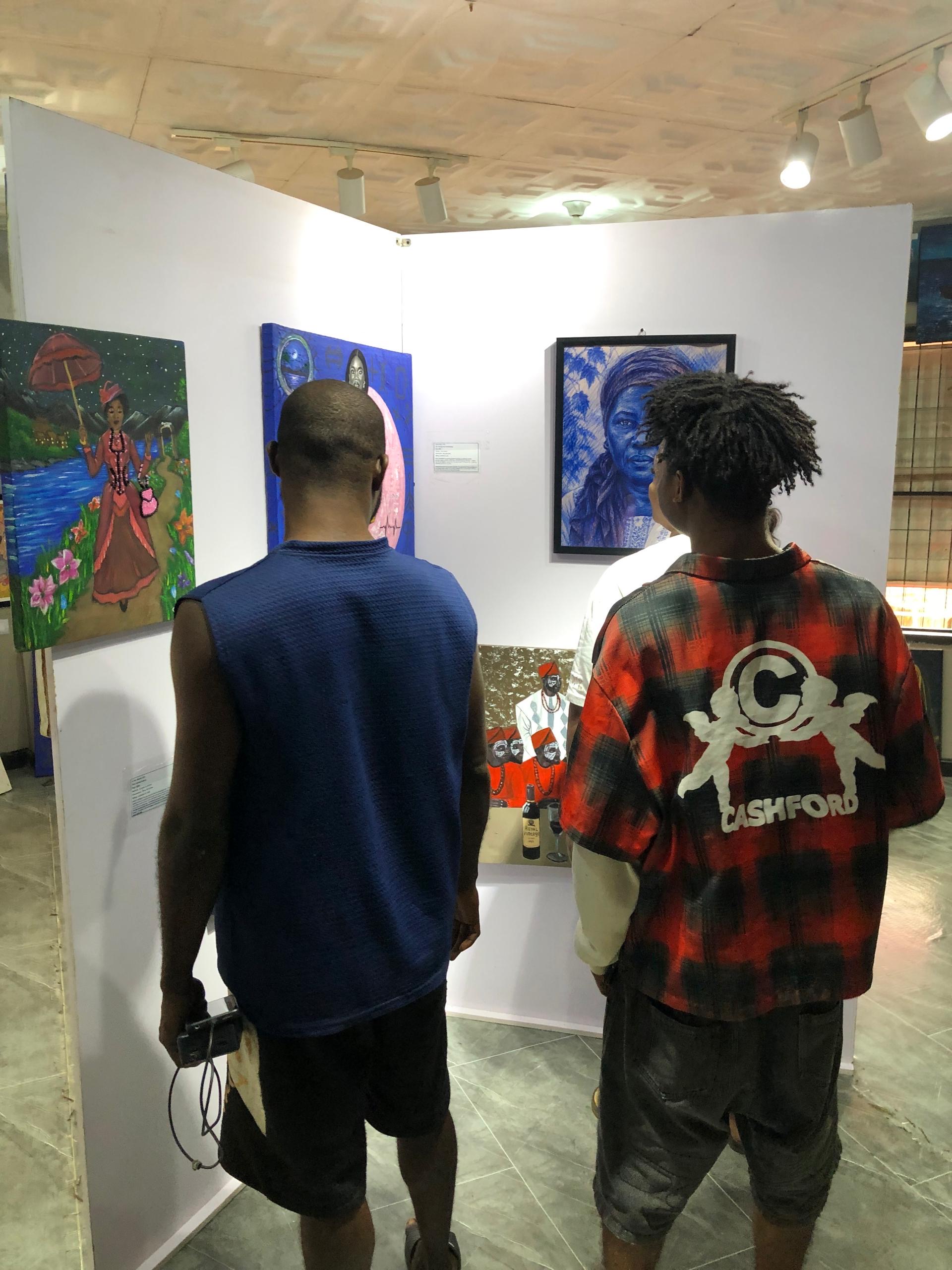
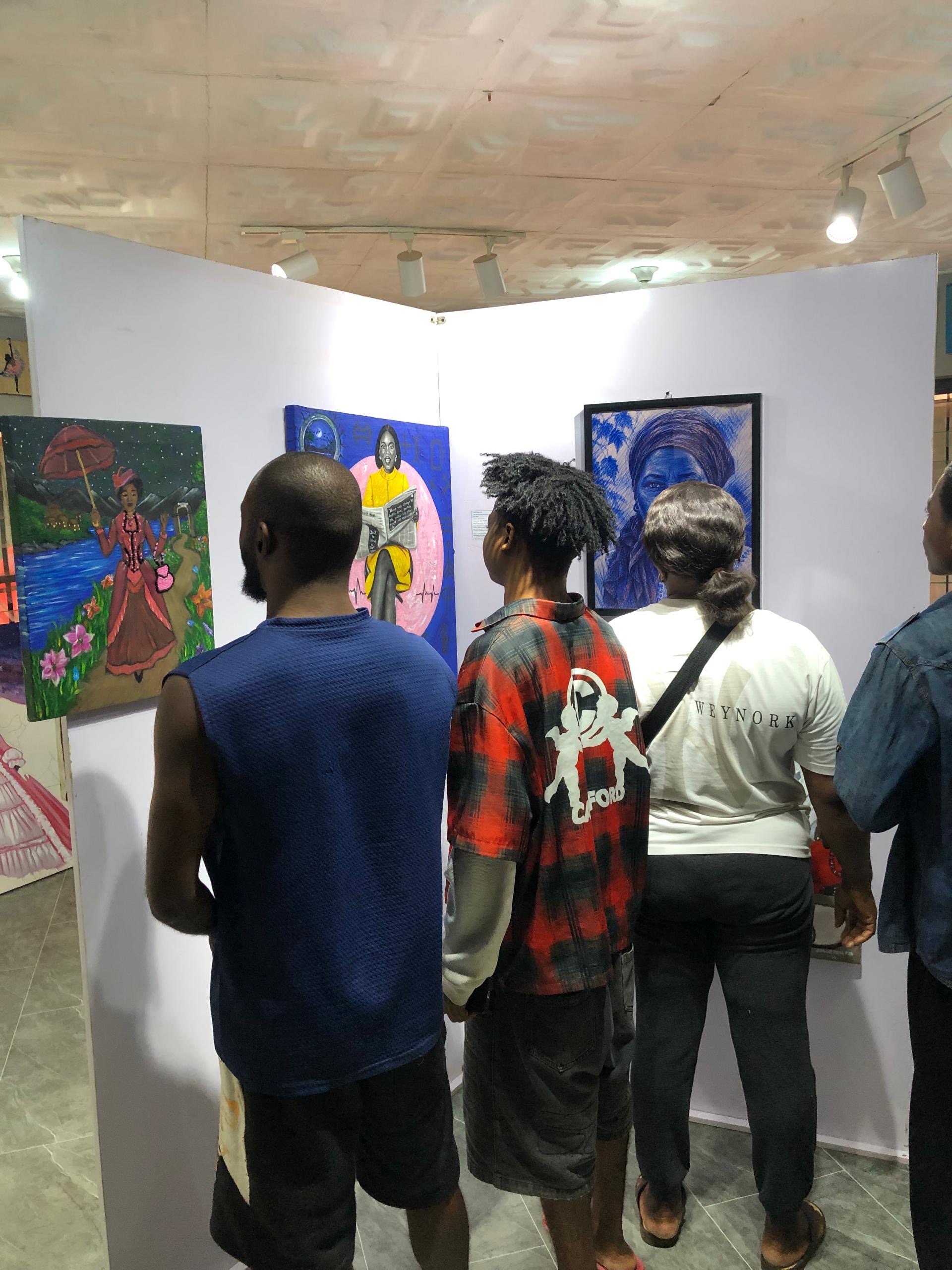
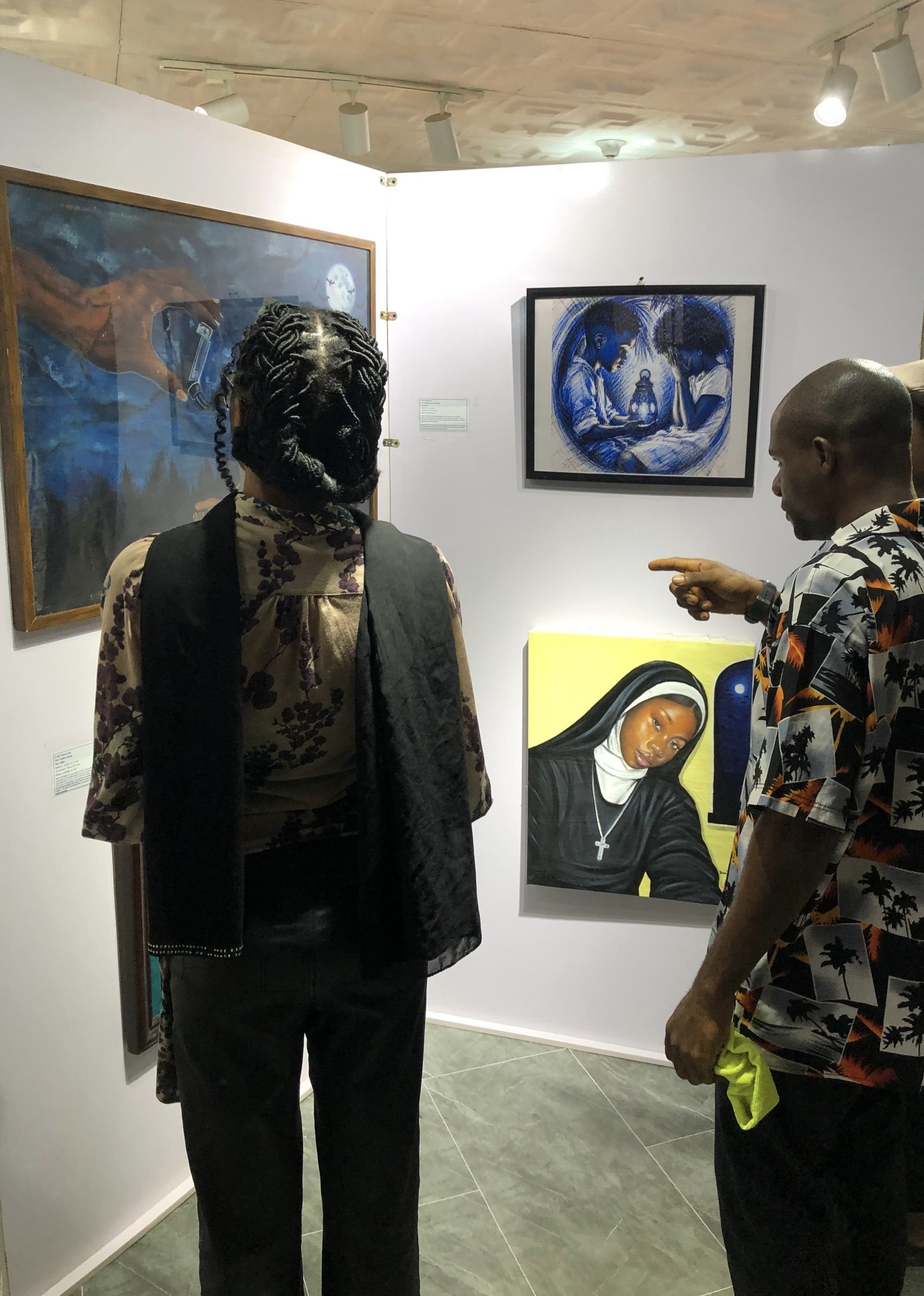
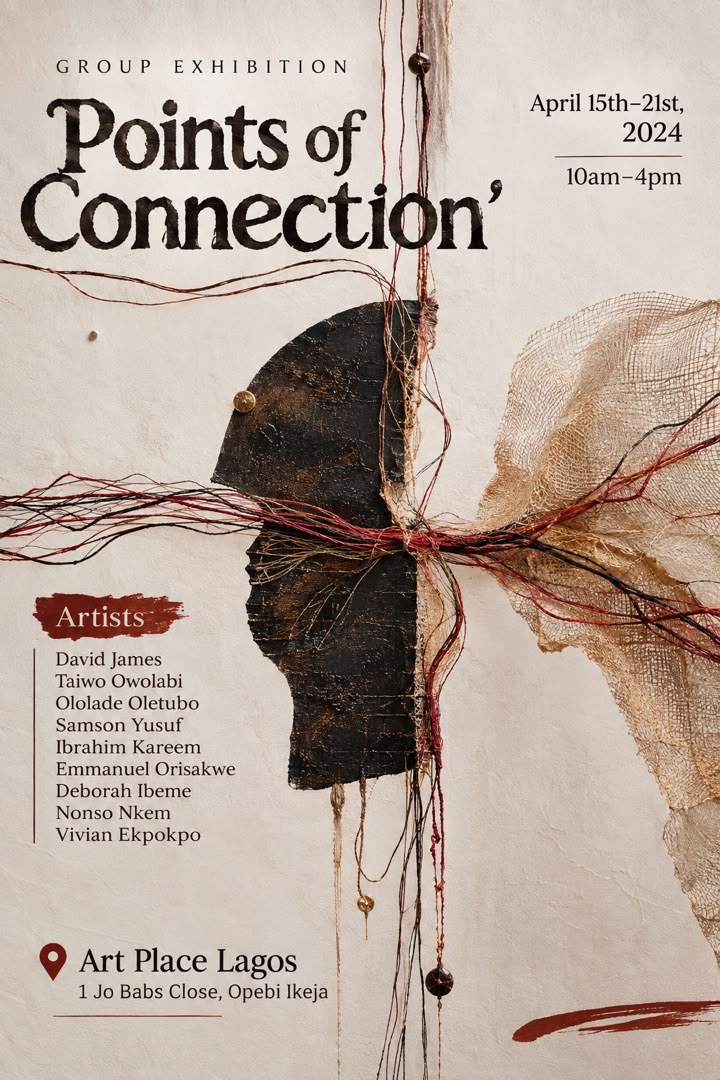
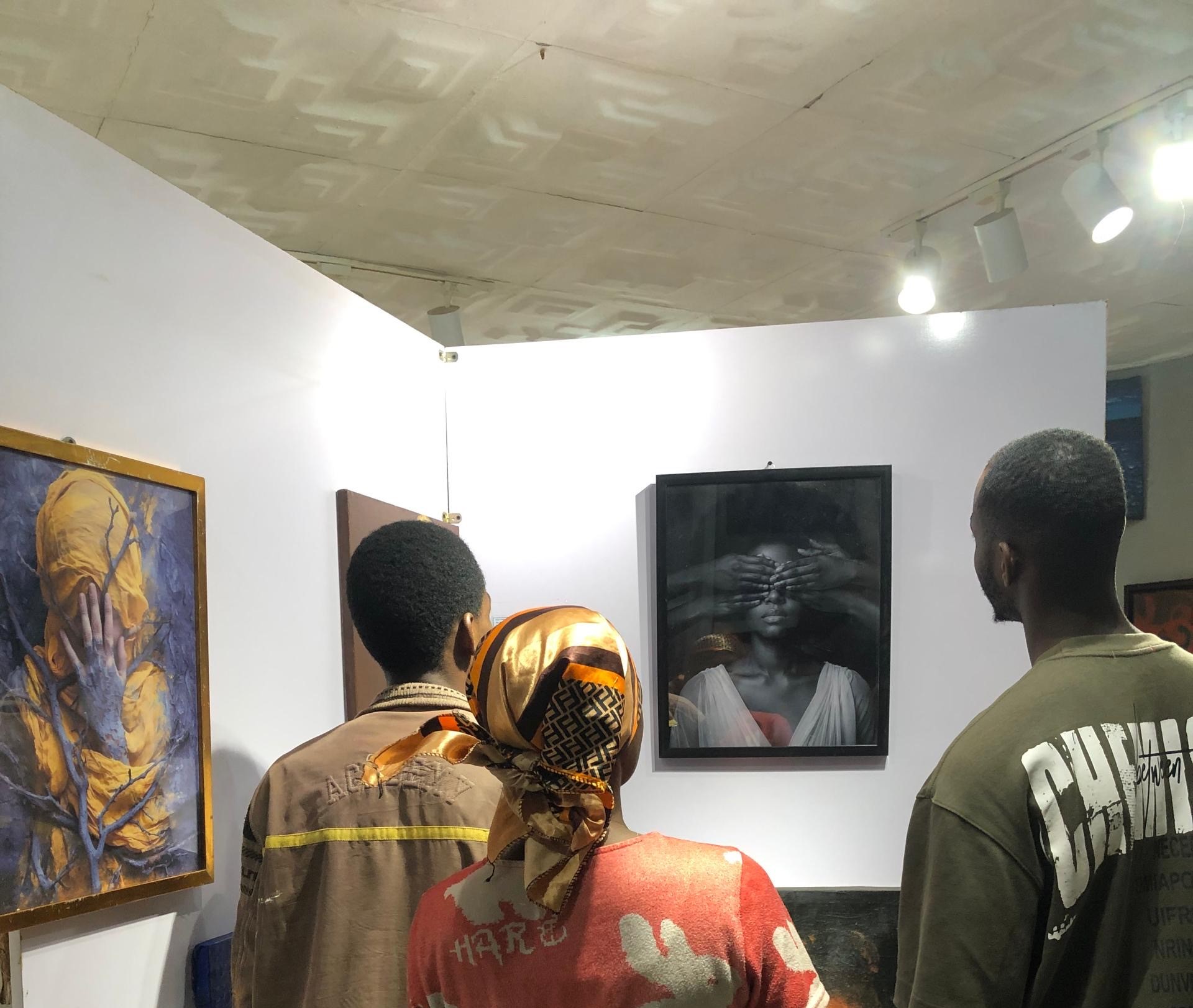
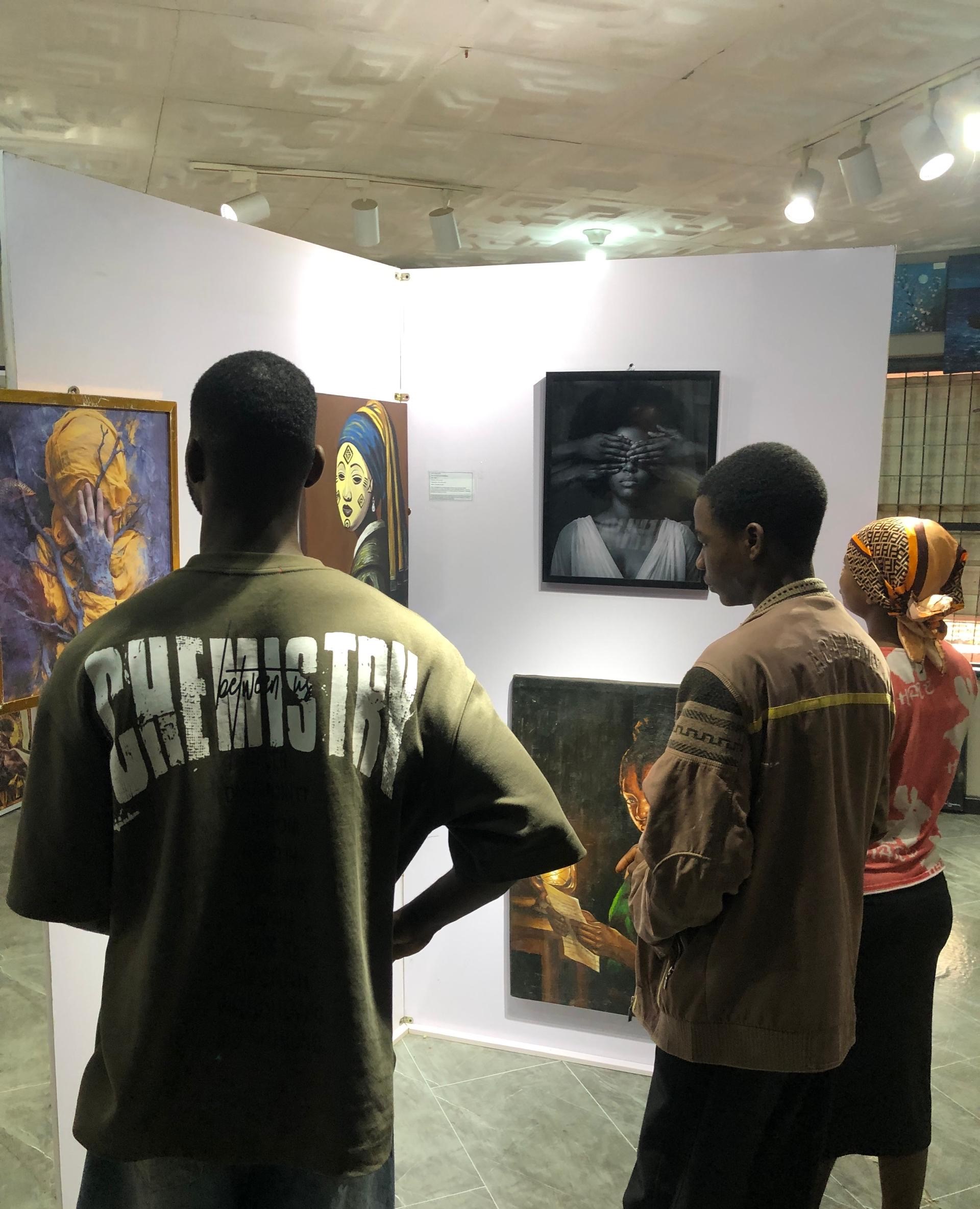
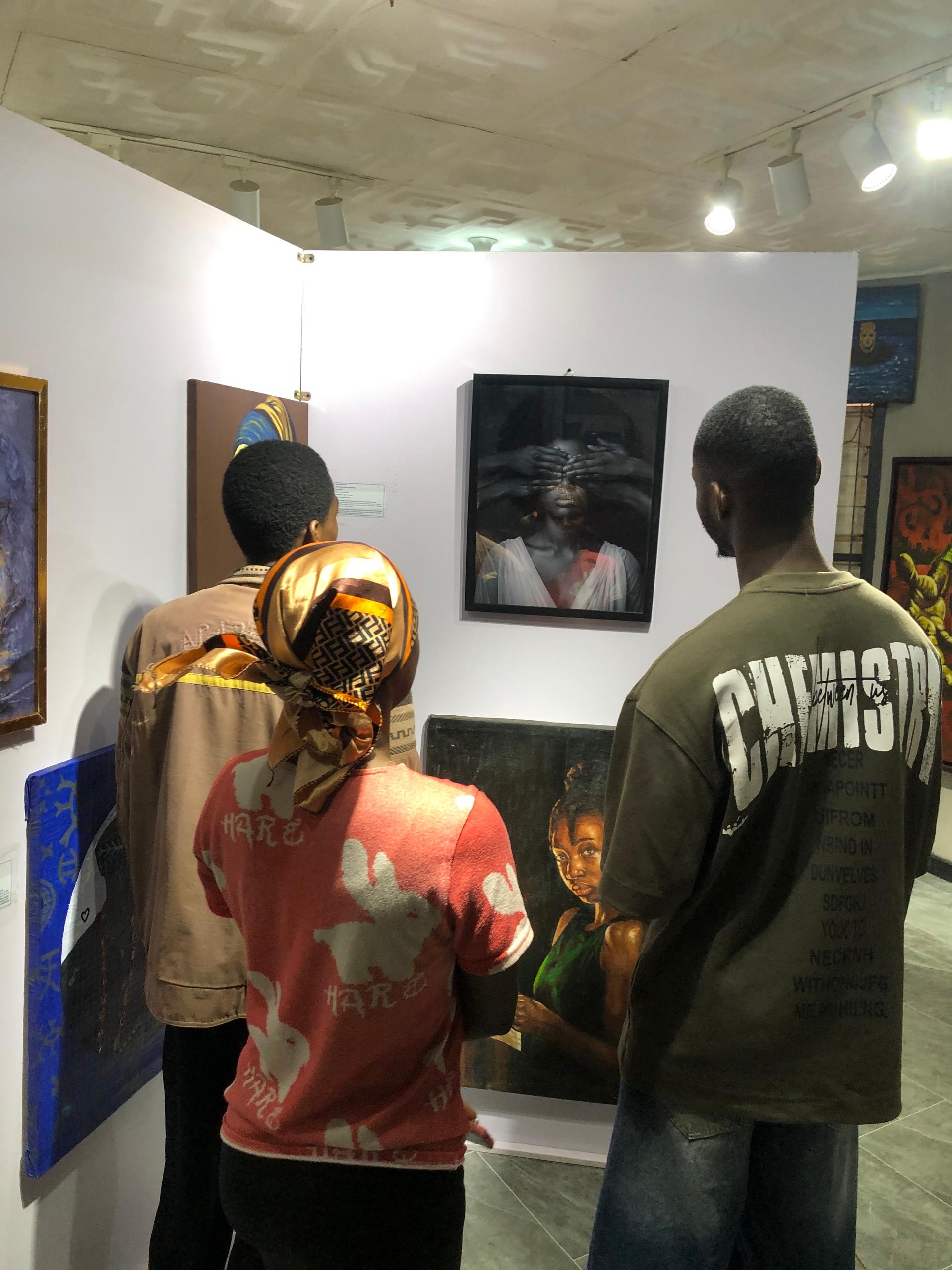
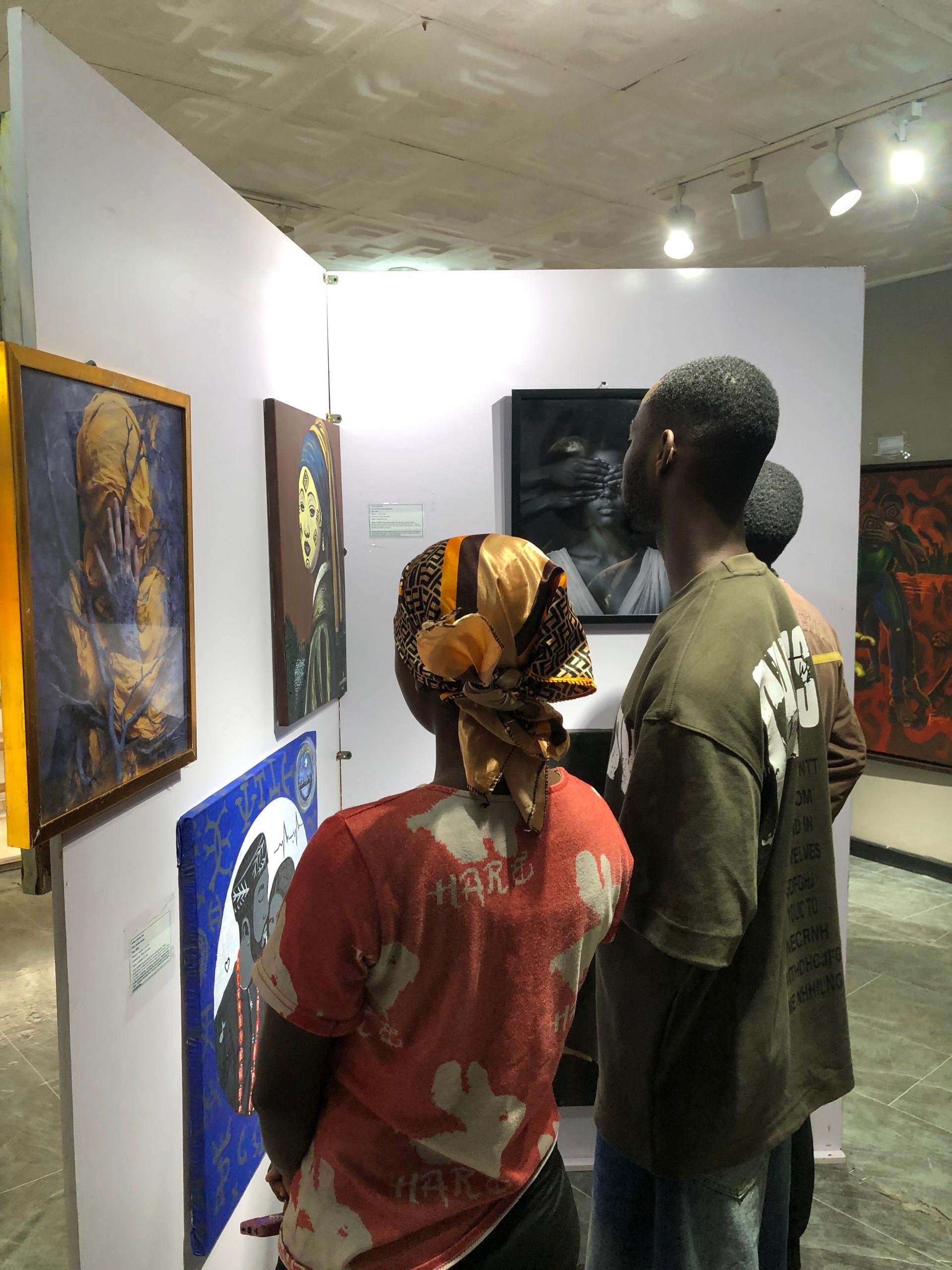
Taiwo Owolabi — Scarf
In Scarf, Taiwo Owolabi explores the relationship between identity, personal expression, and the cultural significance of everyday objects.
The scarf becomes more than an accessory, offering a point of reflection on individuality, tradition, femininity, and the ways people communicate their identities through appearance.
The artwork invites viewers to consider how clothing and adornment can carry personal memories, cultural meanings, and expressions of belonging.
Through this familiar subject, Scarf contributes to the exhibition’s broader conversation about the connections between outward appearance, inner identity, and society.
Samson Yusuf — Cave
Samson Yusuf’s Cave invites viewers to reflect on introspection, solitude, and the search for understanding within the human experience.
The concept of a cave suggests both shelter and mystery, offering a metaphor for the private spaces individuals retreat into for reflection, protection, or self-discovery.
The artwork explores the relationship between the external world and the inner self, encouraging consideration of the emotions and experiences that often remain hidden beneath the surface.
Within Points of Connection, Cave introduces a contemplative perspective, suggesting that meaningful connections with others can begin with a deeper understanding of oneself.
Ibrahim Kareem — Inclusion
Inclusion by Ibrahim Kareem addresses the importance of acceptance, belonging, and the recognition of shared humanity.
The artwork invites reflection on the social and emotional barriers that can separate individuals and communities, while highlighting the value of creating spaces where differences are acknowledged and respected.
Through its central theme, Inclusion encourages viewers to consider the significance of empathy, representation, and collective participation in building stronger relationships.
The piece reinforces one of the exhibition’s central ideas: that human connection becomes more meaningful when individuals are seen, heard, and valued.
Emmanuel Orisakwe — Unity
Emmanuel Orisakwe’s Unity explores togetherness, cooperation, and the strength found in collective identity.
The artwork reflects on the relationships that bind individuals and communities, highlighting the importance of mutual understanding and shared purpose.
Rather than presenting unity as the absence of difference, the piece invites viewers to consider how diverse perspectives and experiences can coexist within a common human experience.
Unity contributes to the exhibition’s exploration of connection by emphasising the role of solidarity, collaboration, and collective responsibility in shaping society.
It serves as a reflection on the possibilities that emerge when individuals come together despite their differences.
Deborah Ibeme — Sanity
In Sanity, Deborah Ibeme explores the delicate relationship between emotional well-being, self-awareness, and the pressures of everyday life.
The artwork invites viewers to reflect on the importance of maintaining a sense of balance and inner peace while navigating personal and societal expectations.
Through its thought-provoking title, Sanity raises questions about the emotional experiences that shape human behaviour and the ways individuals seek stability in an increasingly complex world.
The piece contributes an introspective dimension to Points of Connection, highlighting the importance of understanding one’s inner world as part of building meaningful relationships with others.
Nonso Nkem — Motherhood
Motherhood by Nonso Nkem explores one of the most profound forms of human connection: the bond between a mother and child.
The artwork reflects on themes of love, sacrifice, care, protection, and the emotional responsibilities associated with nurturing another life.
Beyond the personal experience of motherhood, the piece invites viewers to consider the broader significance of maternal relationships in shaping families, identities, and communities.
Motherhood celebrates the strength and tenderness associated with caregiving, while acknowledging the enduring influence of maternal figures across generations.
Within the exhibition, the artwork reinforces the idea that human connection is often rooted in the earliest relationships through which individuals experience love, belonging, and emotional security.

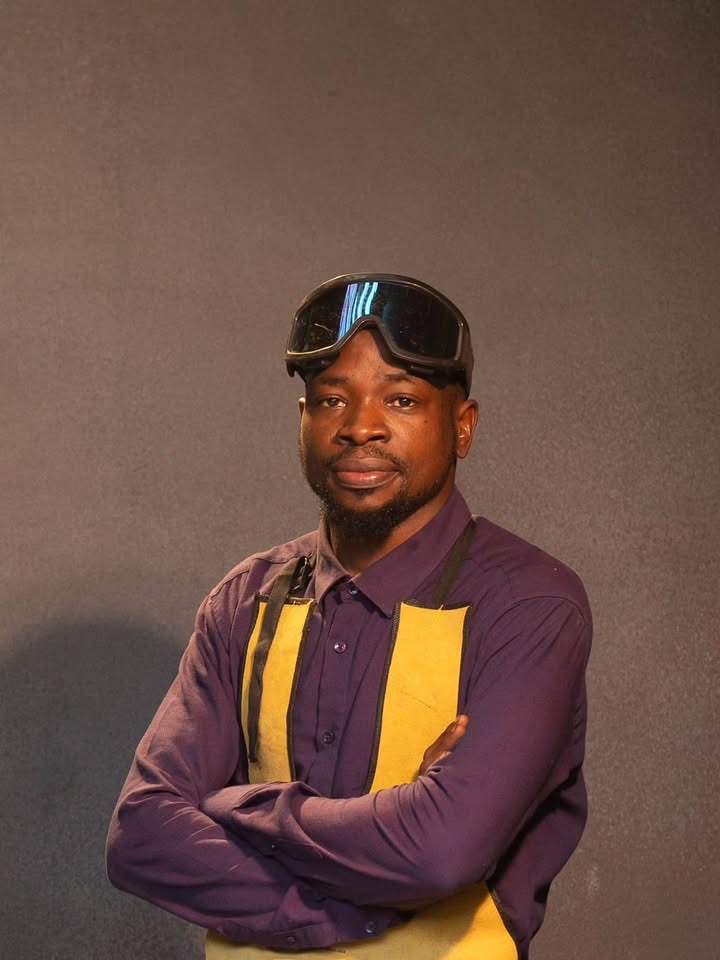
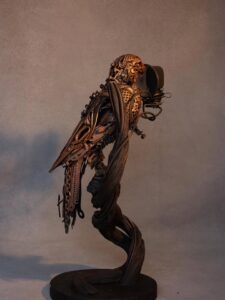
 That transformation is particularly relevant to Taiwo's sculptural practice. An artwork listed under the name Taiwo Abisoye, Arabian Horse (2024), is documented as a unique installation made from scrap metal, illustrating how industrial materials can be reimagined as sculptural forms. 
Sculpture is one of the most demanding forms of visual expression. Unlike painting, where an artist works primarily across a surface, sculpture requires an understanding of physical space, balance, structure and dimension.
Every angle matters. Every connection has a purpose. And every decision contributes to the final form.
For Abisoye Taiwo, the appeal of sculpture lies in its ability to turn artistic vision into something tangible. The process is not simply about producing an object that looks impressive. It is about giving shape to an idea and allowing viewers to experience that idea from different perspectives.
Working with metal also introduces an interesting relationship between strength and creativity. A material associated with construction, machinery and industrial activity becomes capable of expressing movement, elegance and artistic imagination.
This is what makes sculpture such a compelling medium. It challenges the artist to go beyond appearance and explore the possibilities hidden within the material itself.