Andrew Esiebo: The Nigerian Photographer Changing How Africa Is Seen, One Image at a Time
From the bustling streets of Lagos to international galleries, Andrew Esiebo has built a remarkable career documenting the beauty, struggles and complexities of everyday life. His photography does more than capture moments; it challenges stereotypes, preserves culture and gives ordinary people the visibility they deserve.
There are photographers who take pictures, and there are photographers who make us question what we see. Andrew Esiebo belongs to the latter.
For the Nigerian photographer and visual storyteller, the camera is more than a creative instrument. It is a means of exploring identity, understanding society and telling stories that might otherwise remain unnoticed.
His photographs do not depend on glamour or carefully constructed perfection. Instead, they find meaning in the everyday: the neighbourhood barbershop, the football field, the changing streets of a city and the people whose lives reveal something important about the society around them.
Born in Lagos, Esiebo has spent much of his career exploring urbanisation, migration, popular culture, religion, sexuality and the human experiences that connect these subjects. His work has travelled far beyond Nigeria, earning recognition across major international exhibitions and institutions.
Yet what makes his photography particularly compelling is not simply how far it has travelled. It is how closely it remains connected to the lives of ordinary people.

Finding Extraordinary Stories in Ordinary Places
Photography often celebrates the spectacular. Esiebo's work demonstrates that some of the most revealing stories exist in places people walk past without a second thought.
A barbershop, for example, might appear to be nothing more than a place where people get their hair cut. But look beyond the mirrors, clippers and conversations, and it becomes something else entirely: a meeting point, a space for self-expression and a reflection of social identity.
This understanding inspired one of Esiebo's best-known photographic projects, Pride, which explores the culture of male barbershops across West Africa.
The project grew from a conversation with a Lagos barber who spoke proudly about his profession and the influential people he had served, including a former Nigerian president. That encounter encouraged Esiebo to investigate the deeper social significance of barbers and their businesses.
Through Pride, Esiebo examined how hairstyles communicate personality, confidence, aspiration and belonging. His photographs also revealed how barbershops function as social spaces where people from different backgrounds interact.
What might have been an ordinary documentary series became a wider exploration of dignity, culture and the importance of professions that society sometimes overlooks.
And that is one of Esiebo's greatest strengths: his ability to recognise a meaningful story where others might see only routine.
Challenging the Way the World Sees Africa
For decades, international representations of Africa have often been dominated by narratives of conflict, poverty, political instability and hardship.
While these realities deserve attention, they do not tell the whole story of a continent filled with creativity, ambition, humour, cultural richness and everyday resilience.
Esiebo's photography offers a more expansive perspective.
His images make room for the energy of Nigerian cities, the creativity of young people, the intimacy of community life and the cultural expressions that shape contemporary African identity.
In 2014, The Guardian highlighted his contribution to changing perceptions of Africa through photography and social media, particularly his documentation of life in Lagos.
This is what gives his work significance beyond the gallery wall.
By photographing people and environments with curiosity and attention, Esiebo challenges audiences to look beyond familiar assumptions. His work suggests that African stories should not be reduced to a single narrative, nor should their complexity be overlooked.
He is not simply photographing Africa for the world to see. He is contributing to the way Africa represents itself.
Football, Identity and the Power of Community
Another fascinating aspect of Esiebo's artistic practice is his exploration of football.
In Nigeria, football is more than a sport. It is part of everyday life, a source of national pride and a shared language capable of bringing people together across differences.
Through projects such as For the Love of It, Esiebo has explored football's relationship with public spaces, community and Nigerian society.
His photography examines the environments where the game is played and the people who keep its culture alive, often far from professional stadiums.
His work has also extended to South Africa, where he documented older women playing football, challenging conventional assumptions about age, gender and participation in sport.
These projects reveal an artist interested in more than visual beauty. They show his willingness to investigate how ordinary activities reflect larger questions about belonging, opportunity and social expectations.
From Lagos to the International Art World
Esiebo's career is a testament to the global relevance of Nigerian photography.
His work has appeared in major exhibitions including the São Paulo Biennial, the Havana Biennial, the LagosPhoto Festival and A World in Common: Contemporary African Photography at London's Tate Modern.
His photographs have also been published by internationally recognised outlets such as National Geographic, The New York Times, The Guardian and the Financial Times.
Among his notable achievements is the 2011 Artistic Creation Prize awarded by the Musée du Quai Branly in Paris. 
These achievements reflect the international interest in his work, but they also point to something larger: the growing recognition of African photographers as important contributors to contemporary visual culture.
For Esiebo, the Nigerian experience is not a limitation on his artistic relevance. It is a rich starting point for exploring themes that resonate across geographical and cultural boundaries.
Identity, migration, faith, ambition and belonging are not exclusively Nigerian concerns. They are human experiences, and his photographs give them a distinctly personal and cultural perspective.
Photography as a Form of Social Responsibility
What separates meaningful documentary photography from casual image-making is often the intention behind it.
A photograph can inform, but it can also provoke questions. It can reveal uncomfortable truths, challenge assumptions or preserve experiences that might otherwise disappear from public memory.
Esiebo's approach demonstrates an awareness of this responsibility.
His subjects are not merely visual elements placed within a frame. They are people whose environments, choices and experiences contribute to larger social narratives.
This sensitivity is especially important when documenting communities that are frequently misunderstood or inadequately represented.
By exploring subjects such as migration, gender politics and religion, Esiebo enters conversations that require more than technical skill. They demand curiosity, patience and a willingness to engage with different perspectives.
His photographic practice reminds us that storytelling is not only about deciding what deserves to be seen, but also about considering how it should be represented.
Inspiring the Next Generation of African Photographers
Beyond his personal achievements, Esiebo has contributed to the development of emerging photographers through mentorship, workshops and photography training programmes.
His professional biography documents his involvement in initiatives including Naija in Light, a photography training project in Kano and Lagos, as well as workshops and mentoring engagements across Africa.
This commitment to sharing knowledge is an important part of his contribution to the creative industry.
For younger photographers, his career offers a valuable lesson: powerful storytelling does not always require access to extraordinary places or famous personalities.
Sometimes, the strongest images emerge from paying closer attention to the people, streets and communities already around us.
His journey also demonstrates that photography can grow beyond a personal passion into a practice capable of influencing cultural conversations and reaching audiences across the world.
A Legacy Beyond the Lens
Andrew Esiebo's importance lies not only in the photographs he has created but also in the conversations those photographs continue to inspire.
His work encourages viewers to reconsider what makes a story significant. It draws attention to people whose contributions are easily overlooked and reveals the cultural meaning hidden within everyday experiences.
From barbershops to football fields, from the streets of Lagos to international exhibitions, his photography has consistently returned to the relationship between people and the societies they inhabit.
And perhaps that is what makes his artistic vision so relevant.
At a time when images are produced and consumed at extraordinary speed, Esiebo's work reminds us that photography can still demand something deeper from its audience: attention, understanding and reflection.
He represents a generation of African visual storytellers who are not waiting for others to define their realities. They are documenting those realities themselves, bringing nuance and humanity to stories that deserve to be told.
Andrew Esiebo is not just capturing moments in African life. Through his lens, he is preserving identities, questioning perceptions and helping shape the visual history of a continent.
And long after the camera shutter closes, those stories continue to speak.
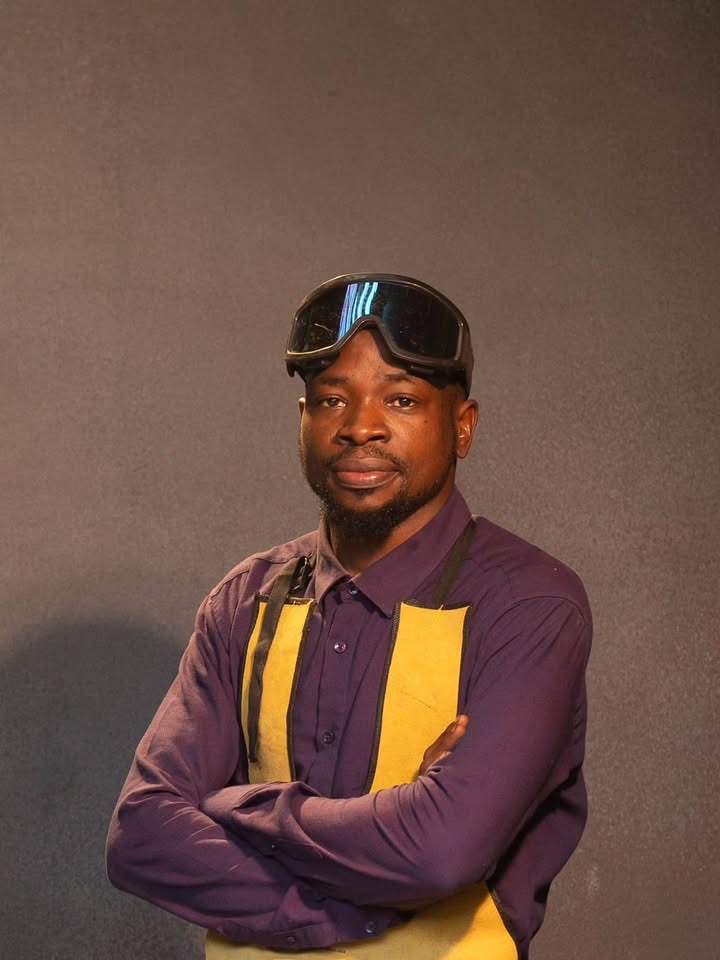
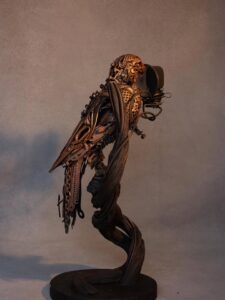
 That transformation is particularly relevant to Taiwo's sculptural practice. An artwork listed under the name Taiwo Abisoye, Arabian Horse (2024), is documented as a unique installation made from scrap metal, illustrating how industrial materials can be reimagined as sculptural forms. 
Sculpture is one of the most demanding forms of visual expression. Unlike painting, where an artist works primarily across a surface, sculpture requires an understanding of physical space, balance, structure and dimension.
Every angle matters. Every connection has a purpose. And every decision contributes to the final form.
For Abisoye Taiwo, the appeal of sculpture lies in its ability to turn artistic vision into something tangible. The process is not simply about producing an object that looks impressive. It is about giving shape to an idea and allowing viewers to experience that idea from different perspectives.
Working with metal also introduces an interesting relationship between strength and creativity. A material associated with construction, machinery and industrial activity becomes capable of expressing movement, elegance and artistic imagination.
This is what makes sculpture such a compelling medium. It challenges the artist to go beyond appearance and explore the possibilities hidden within the material itself.